


Introduction
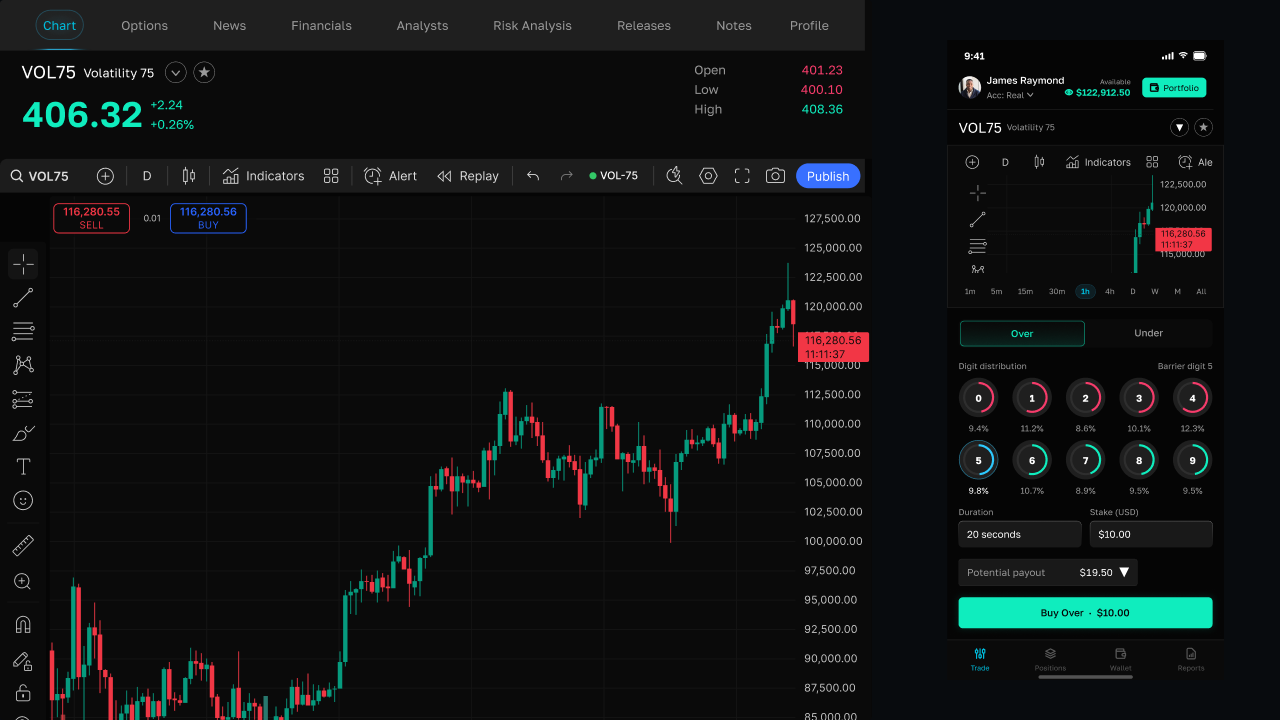
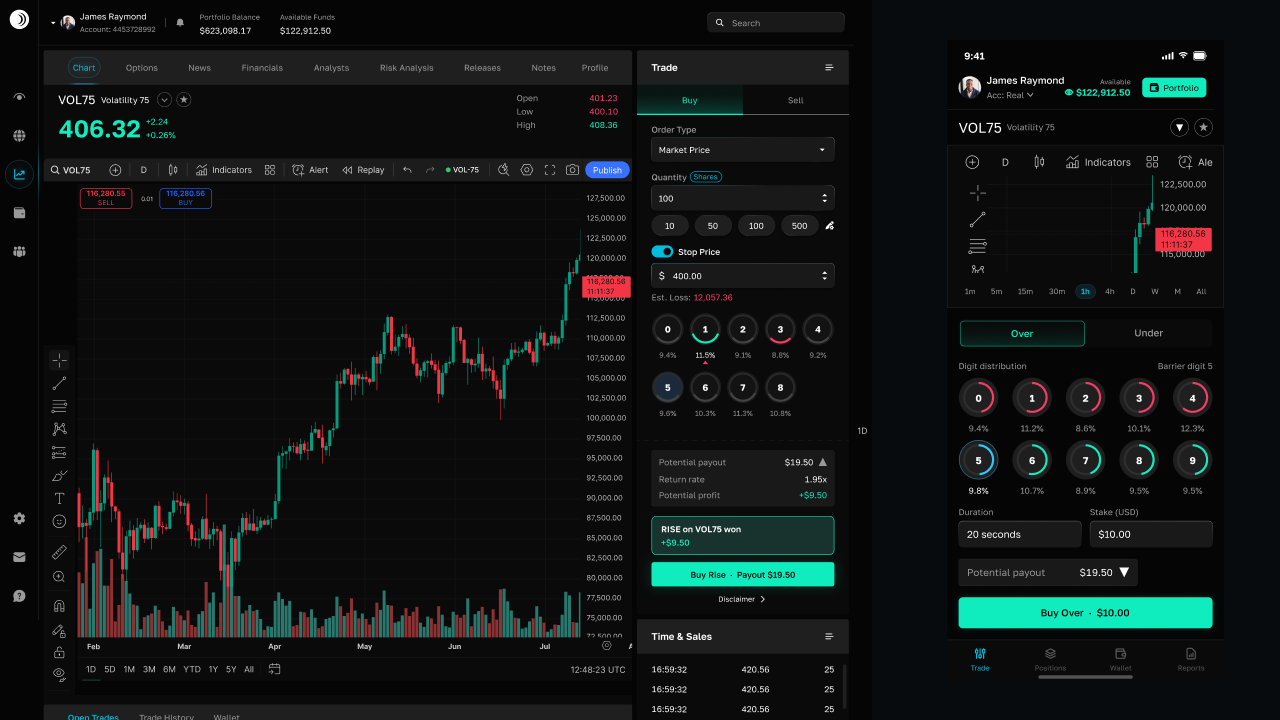
An Over digit contract focuses on the last decimal digit of the index price at settlement. You pick a digit from 0 to 9, and you win if the exit price’s final digit is greater than your pick.
How the last digit works
Index prices are quoted with decimal places. For digit contracts, only the rightmost decimal digit matters. For example, if the exit price is 1,250.37, the last digit is 7. The rest of the price is ignored for settlement.
What you are predicting
You choose a threshold digit (0–9). At expiry, the platform reads the last digit of the exit price. If that digit is higher than your pick, you win.
Win condition
Last digit of exit price > your prediction
Loss condition
Last digit is equal to or less than your prediction. Full stake forfeited.
What to set on the order form
- Stake — $1 to $10,000
- Duration — 1 to 60 seconds
- Digit prediction — your threshold (0–9)
Win with prediction 5
Exit price: 1,250.38 → last digit 8
8 > 5 → Win
Loss with prediction 5
Exit price: 1,250.33 → last digit 3
3 is not greater than 5 → Loss
Edge case: prediction 5, digit 5
Exit price: 1,250.35 → last digit 5
5 is not greater than 5 → Loss
Choosing your prediction
Lower predictions (0, 1, 2) win more often because more digits beat them. Higher predictions (8, 9) win less often — only digit 9 beats a prediction of 8, for example. Payout is always 1.95× on a win regardless of prediction.
Over is about the final digit at expiry — not digits seen during the contract.