



Introduction
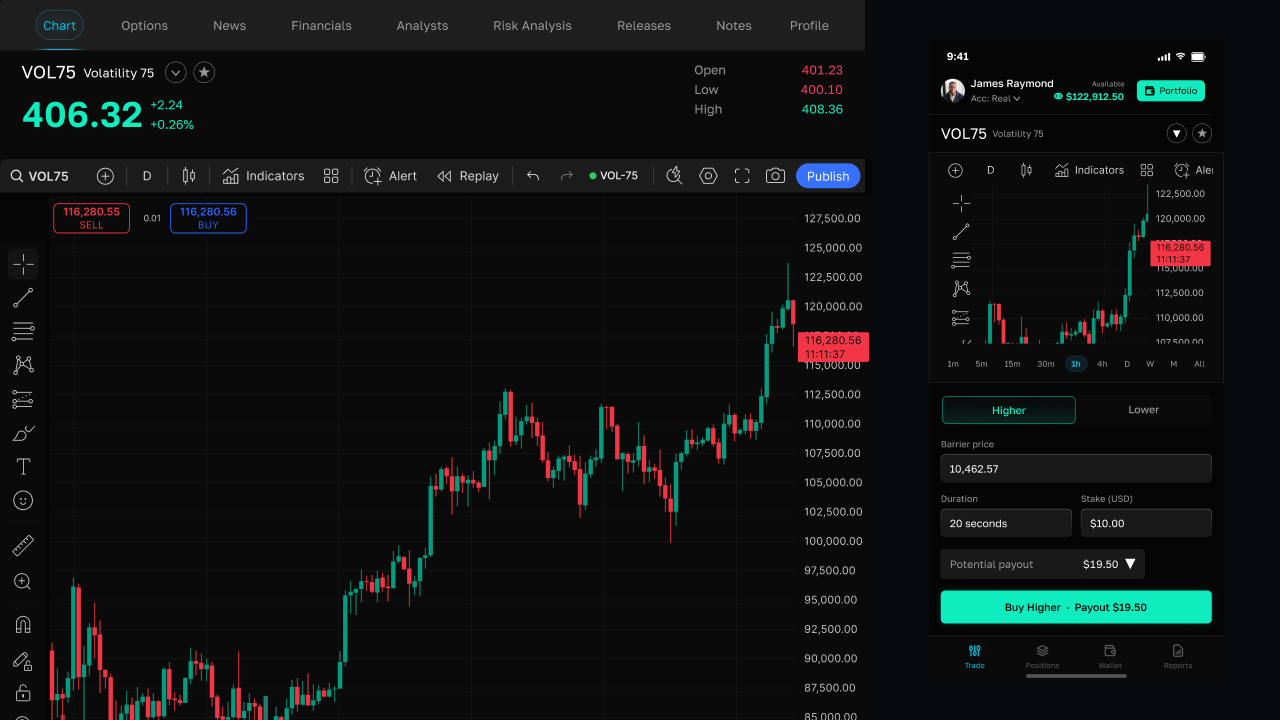
A Higher contract asks whether the index will finish above a barrier you choose when the contract expires. Unlike Rise, which compares exit to your entry, Higher compares exit to a fixed level you set — giving you control over the target price.
What you are predicting
You set a barrier price when opening the contract. You win if the exit price at expiry is above that barrier. Your entry price is recorded but is not used for settlement — only the barrier and exit price matter.
Win condition
Exit price > barrier at expiry. The exit must be strictly above your chosen level.
Loss condition
Exit price is equal to or below the barrier. You lose your full stake. There is no Allow equals option on Higher contracts.
What to set on the order form
- Stake — $1 to $10,000
- Duration — 1 to 60 seconds
- Barrier — the price level exit must exceed. The form suggests a default based on the current quote; adjust with the stepper.
Winning Higher trade
Barrier: 1,300.00
Entry price: 1,250.50 (informational only)
Exit price: 1,301.25
Result: Win — exit finished above 1,300.00.
Losing Higher trade
Barrier: 1,300.00
Exit price: 1,298.40
Result: Loss — exit did not reach above the barrier.
Barrier above current price
Current price: 1,250.50
Barrier set: 1,280.00
You need the index to rise at least to 1,280.01 by expiry. A barrier far above spot is harder to hit; one just above spot is easier but may offer similar payout (fixed 1.95× on any win).
Choosing a barrier
A barrier closer to the current price is easier to beat for a Higher contract. A barrier far above the market requires a larger upward move in your duration window. The payout rate is the same regardless of how ambitious your barrier is — what changes is the likelihood of winning.
For Higher, only the exit price at expiry matters relative to your barrier — not how price moved during the contract.
Frequently asked questions
Does Higher settle early if price crosses the barrier?

Can my barrier be below the current price?
How is Higher different from Rise?
Related guides
 4 MIN
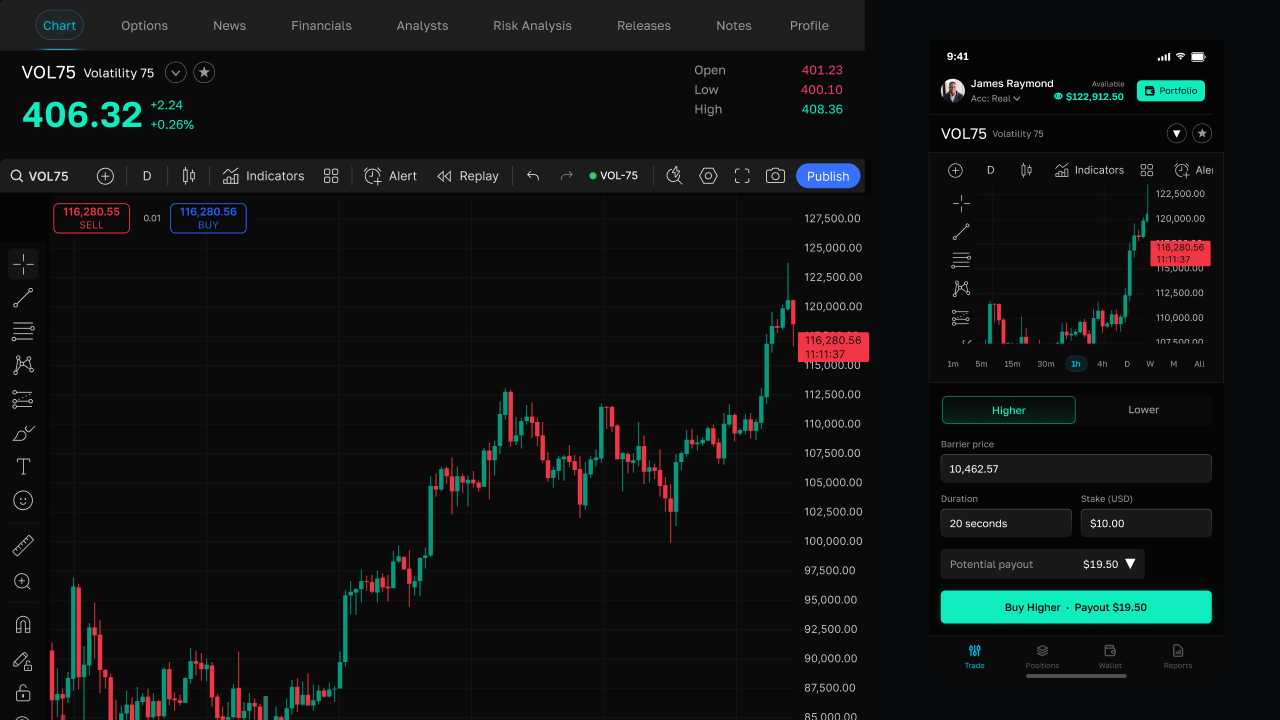
4 MINLower
Lower barrier contracts — predict the index finishes below a barrier you choose.
 4 MIN
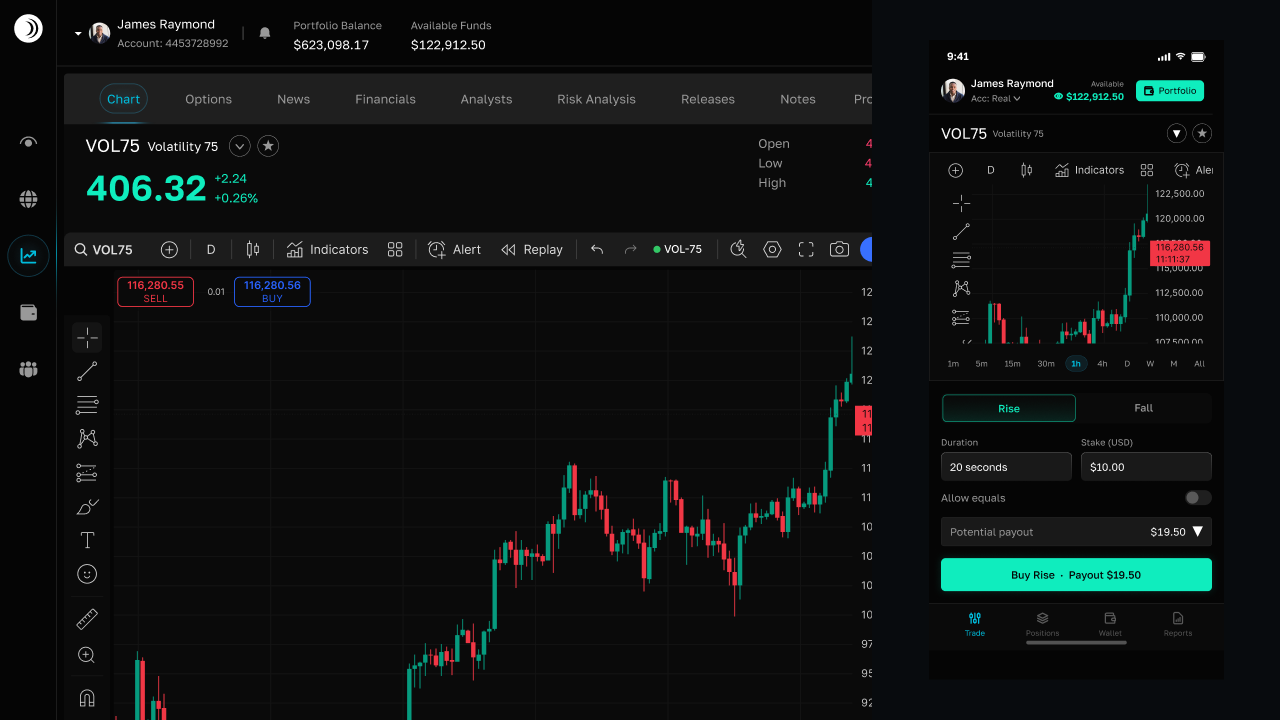
4 MINRise
Rise contracts — predict that the exit price finishes above your entry when the contract expires.
 4 MIN
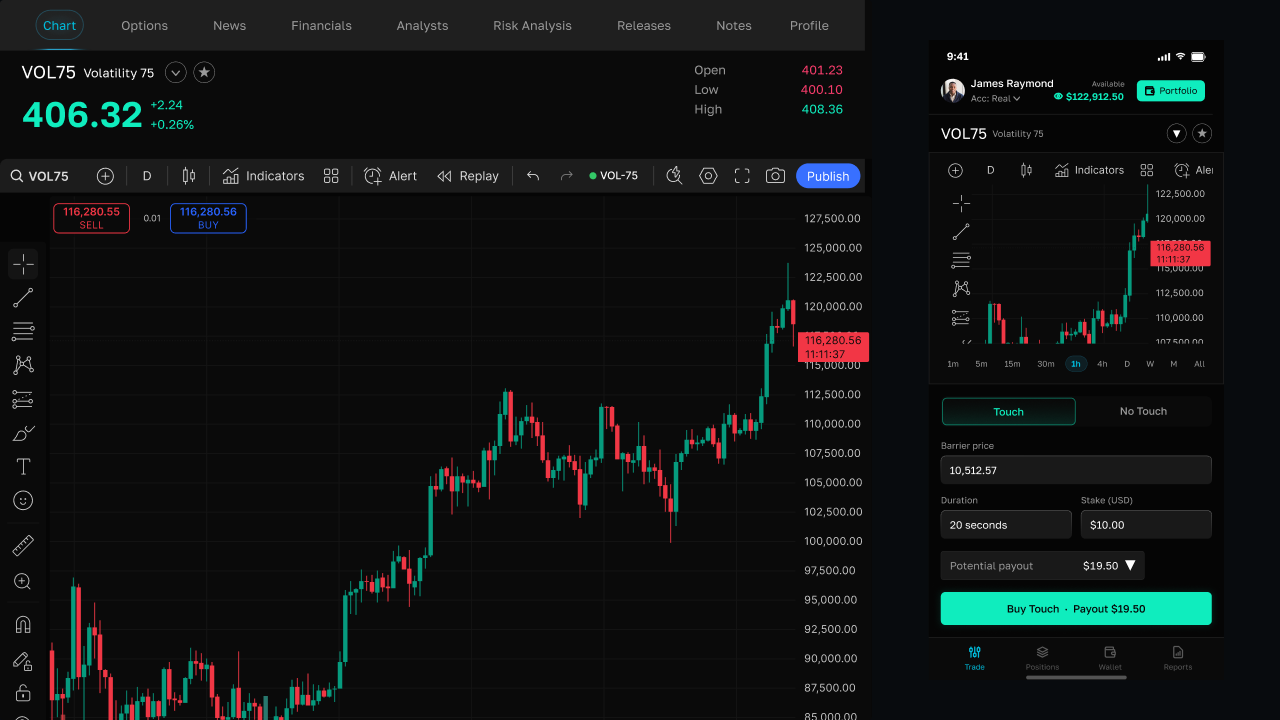
4 MINTouch
Touch contracts — win if price reaches your barrier at any time before expiry.