


Introduction
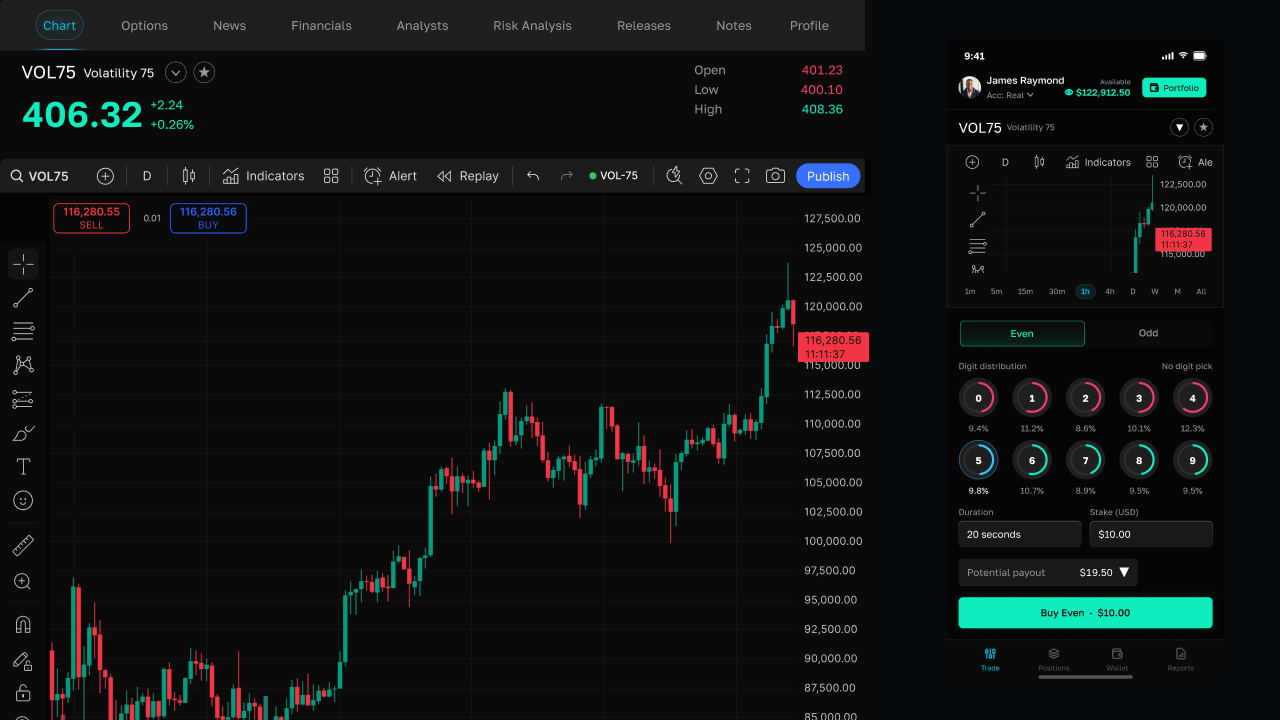
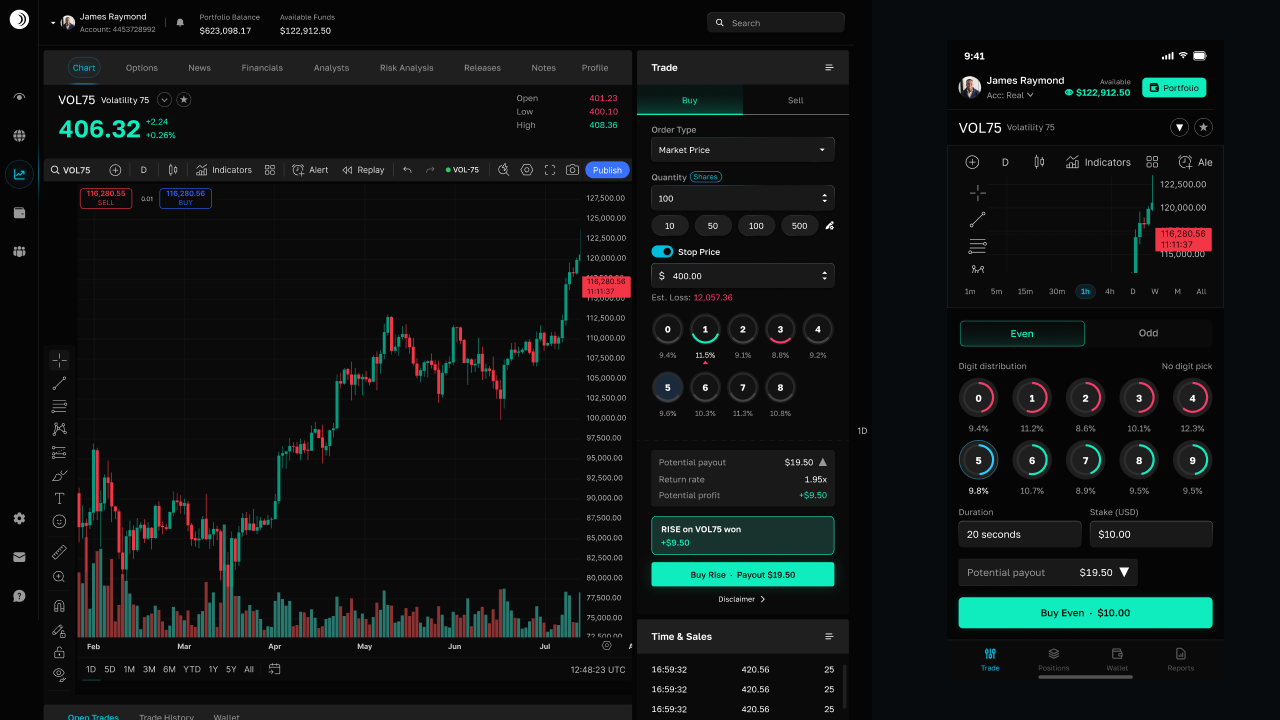
An Even digit contract wins when the last decimal digit of the exit price is an even number: 0, 2, 4, 6, or 8. You do not pick a specific digit — the platform checks parity only.
How the last digit works
At settlement, the platform reads the rightmost decimal digit of the exit quote. For 1,250.46, the last digit is 6, which is even.
Win condition
Last digit is 0, 2, 4, 6, or 8.
Loss condition
Last digit is 1, 3, 5, 7, or 9 (odd).
What to set on the order form
- Stake — $1 to $10,000
- Duration — 1 to 60 seconds
No digit prediction is required for Even.
Winning Even
Exit price: 1,250.44 → last digit 4 (even)
Result: Win
Losing Even
Exit price: 1,250.47 → last digit 7 (odd)
Result: Loss
Zero counts as even
Exit price: 1,250.40 → last digit 0 (even)
Result: Win
Even vs. Odd
Even and Odd are exact opposites on every trade — one wins, the other loses. Each covers five of the ten possible digits, so neither has a built-in advantage in the payout structure (both pay 1.95× on a win).
Even vs. Matches
Matches requires one specific digit you choose (10% chance in pure random terms). Even covers half the digits, so it wins more often in random terms but with the same fixed payout.
Tips
- Even is simple to understand — good for learning digit contracts on demo.
- Outcome depends only on the exit quote, not movement during the contract.
- Pair with Odd on demo to see opposite outcomes on the same settlement.
Even and Odd are the only digit contracts that do not use the digit picker on the order form.