
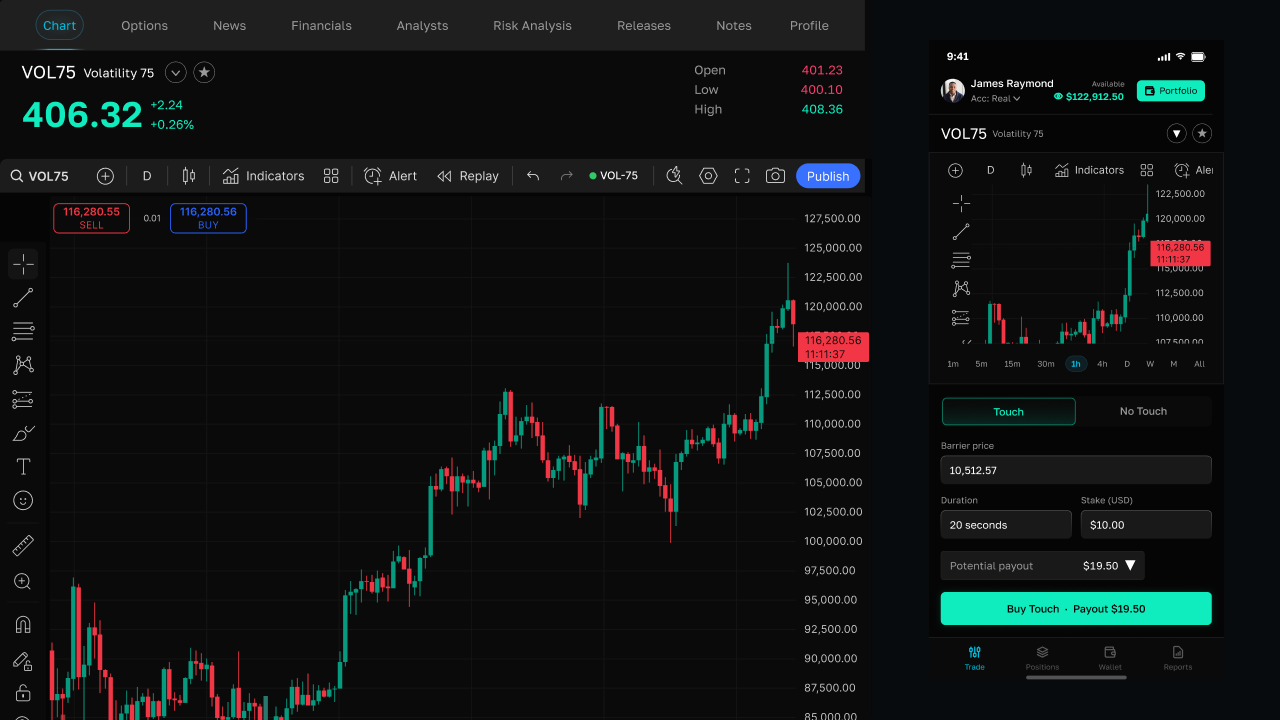



Introduction
A No Touch contract wins if the index price never reaches your barrier before the contract ends. It is the opposite of Touch: one brief contact with the barrier ends the trade as a loss, potentially before the full duration expires.
What you are predicting
You set a barrier and bet that price will stay away from it for the entire contract — or until expiry if the barrier is never hit. You win only if the level remains untouched.
Win condition
The barrier is never reached during the contract. At expiry, if price stayed clear of your level the whole time, you win.
Loss condition
Price touches or crosses the barrier at any point. The contract loses and can settle immediately — you do not wait for the remaining duration.
What to set on the order form
- Stake — $1 to $10,000
- Duration — how long the “stay away” condition must hold
- Barrier — the level price must avoid
Winning No Touch
Barrier: 1,260.00
Duration: 15 seconds
Price moves between 1,248 and 1,258 but never hits 1,260.00. Result: Win at expiry.
Early loss
Barrier: 1,260.00
After 4 seconds, price spikes to 1,260.10. Result: Loss — barrier was touched, contract ends early.
Barrier near current price
Current price: 1,250.50
Barrier: 1,251.00
A barrier very close to spot is easy to breach — No Touch becomes harder to win. A barrier farther away gives more room but price has further to travel if it eventually hits.
No Touch vs. Lower
Lower wins if exit price finishes below a barrier at expiry only.
No Touch wins if price never touches the barrier at all during the contract, regardless of where it closes. You can win No Touch even if exit is above the barrier, as long as price never reached it.
Tips
- Volatile markets increase the chance of an accidental touch — consider barrier distance carefully.
- Longer duration means more time for an unexpected spike to hit your barrier.
- No Touch suits range-bound expectations; Touch suits breakout expectations.
No Touch is unforgiving: one touch ends the trade. Plan your barrier with normal market volatility in mind.
Frequently asked questions
Does a wick through the barrier count?

Can No Touch and Touch use the same barrier?
Does No Touch settle as soon as price looks safe?
Related guides
 4 MIN
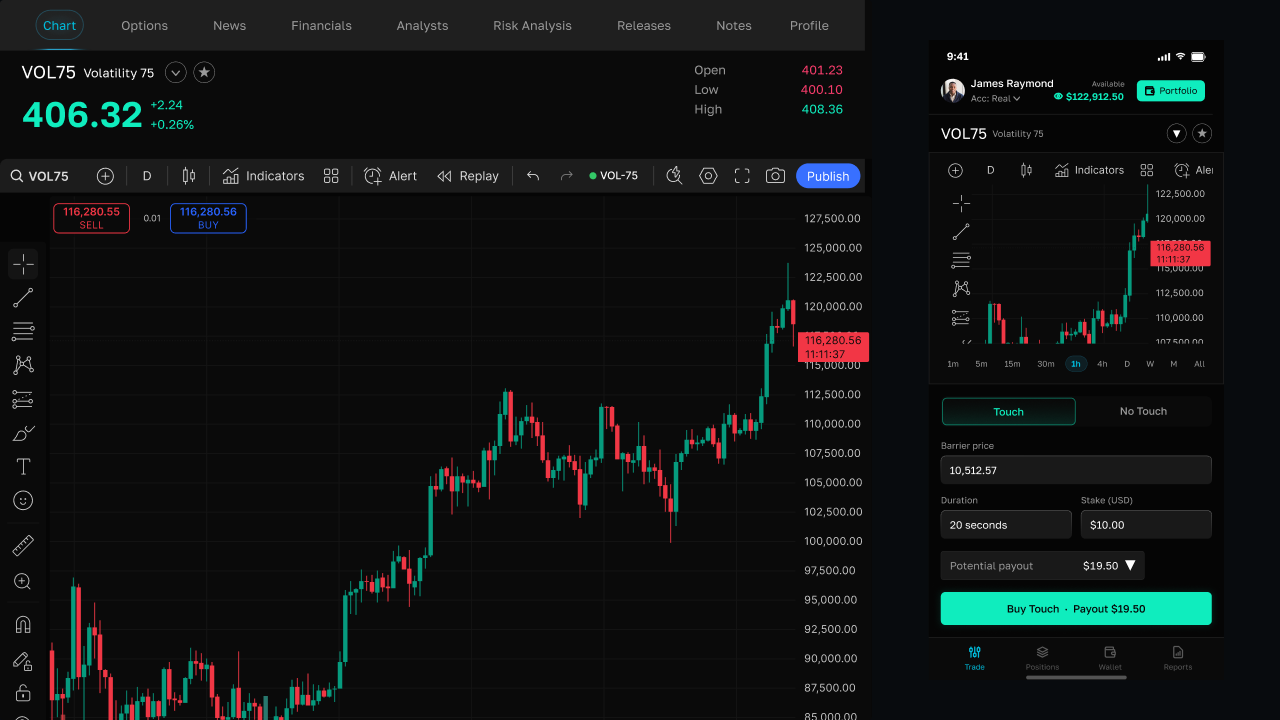
4 MINTouch
Touch contracts — win if price reaches your barrier at any time before expiry.
 4 MIN
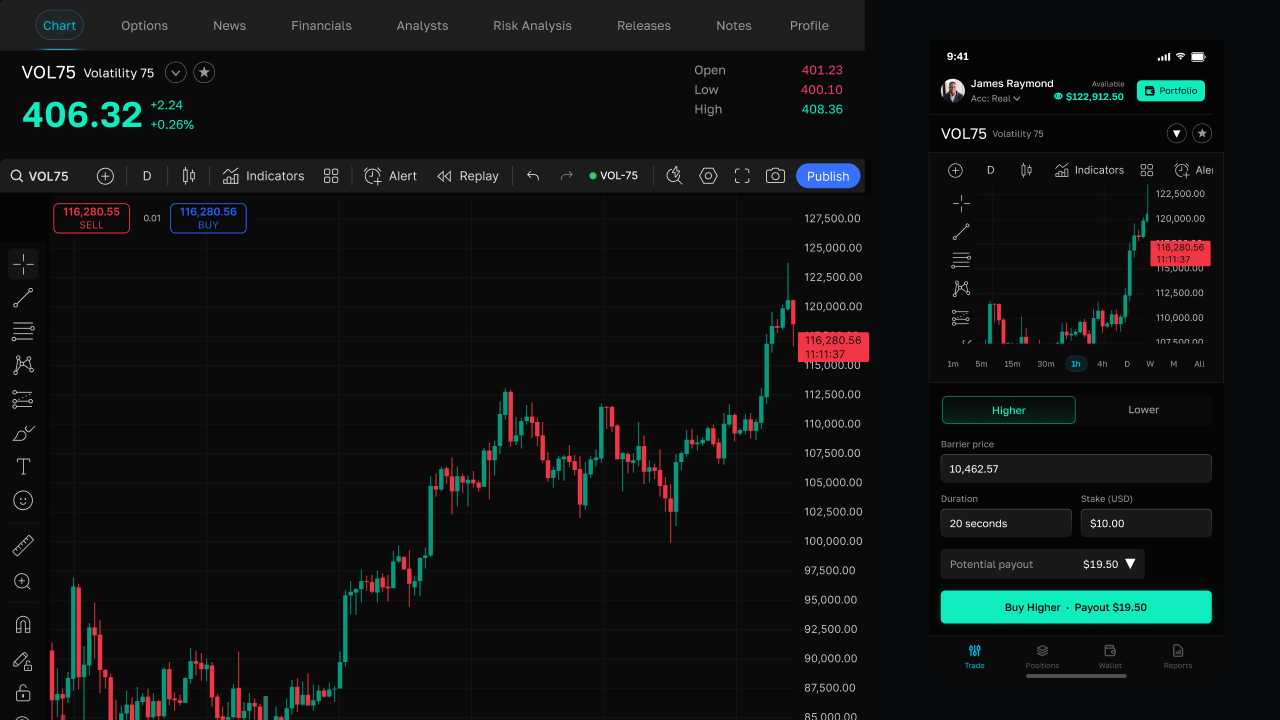
4 MINLower
Lower barrier contracts — predict the index finishes below a barrier you choose.
 4 MIN
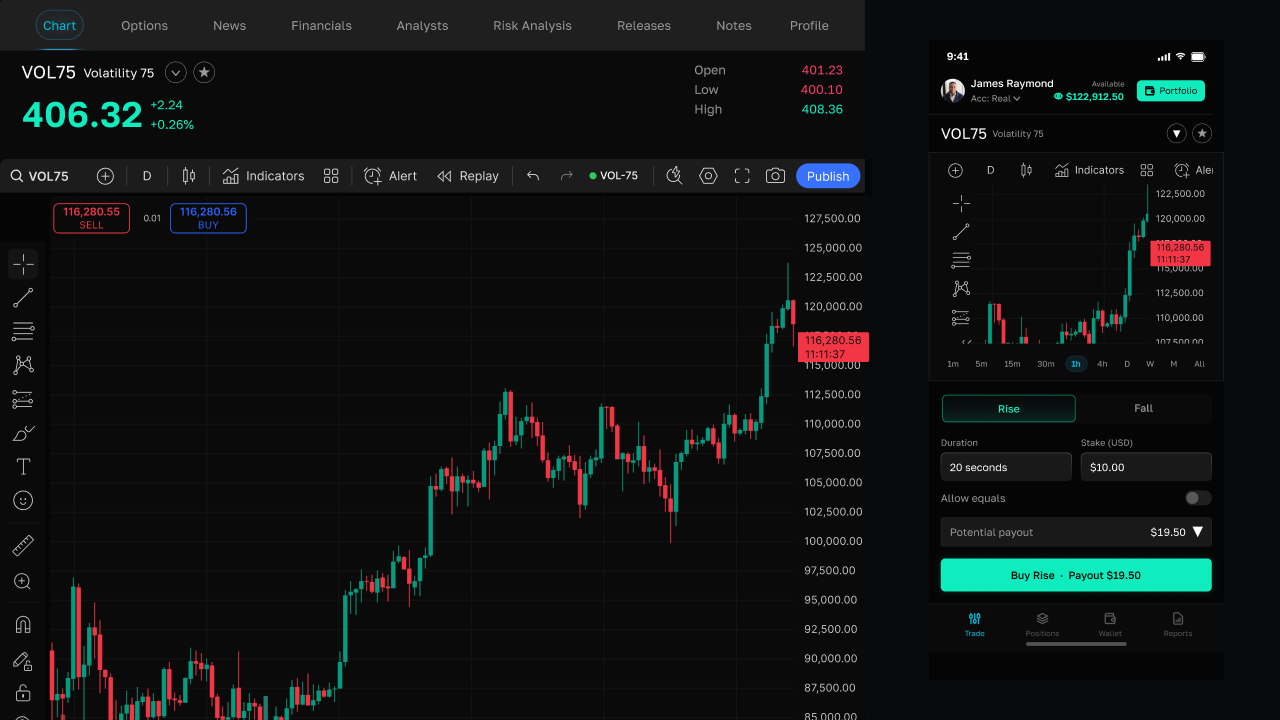
4 MINStakes, Duration & Payouts
Stake limits, tick duration, win/loss payouts, and demo vs. real account behaviour.