



Introduction
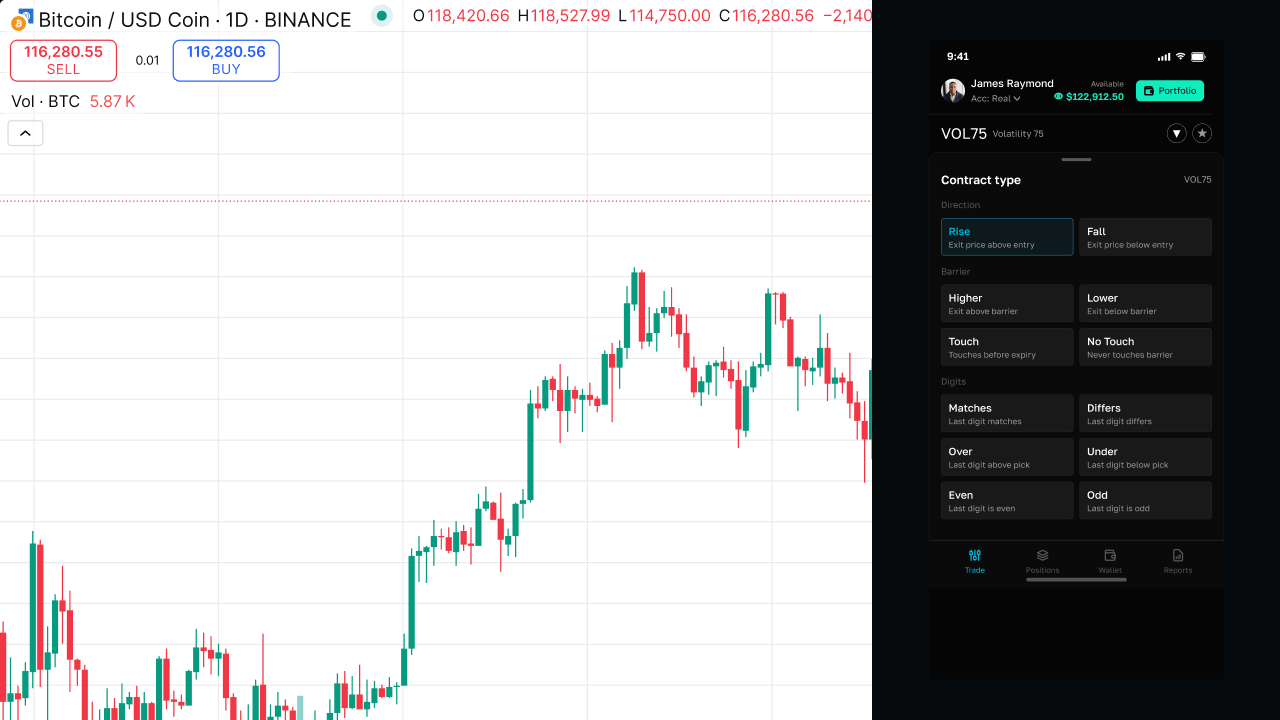
A Fall contract is a direction trade. You are predicting that the index exit price will finish below the entry price when the contract expires. Fall is the mirror image of Rise and suits a bearish short-term view on the index.
What you are predicting
You believe the market will move downward before your chosen duration ends. The entry price is fixed when you submit the order. At expiry, if the exit price is lower than that entry, you win.
Win condition
By default, Fall wins when exit price < entry price. The exit must be strictly lower. If exit equals entry, you lose unless Allow equals is enabled.
With Allow equals on, a tie counts as a win (exit price ≤ entry price). Toggle this on the Rise/Fall order form before submitting.
Loss condition
Fall loses when the exit price is above your entry (always a loss), or equal to entry when Allow equals is off. The full stake is forfeited on a loss.
What to set on the order form
- Stake — $1 to $10,000
- Duration — 1 to 60 seconds
- Allow equals — optional tie handling
No barrier or digit is required for Fall.
Winning Fall trade
Entry price: 1,250.50
Exit price: 1,249.92
Result: Win — exit is below entry.
Losing Fall trade
Entry price: 1,250.50
Exit price: 1,251.10
Result: Loss — price finished above entry.
Flat market without Allow equals
Entry price: 1,250.50
Exit price: 1,250.50
Result: Loss for Fall (and also loss for Rise without Allow equals).
Tips
- Fall and Rise share the same order form — switch tabs between them without leaving the panel.
- Volatility indices can reverse quickly; a short duration means less time for your view to play out.
- Practice on demo to compare outcomes with and without Allow equals on choppy markets.
Direction contracts are about where price ends, not the path it takes to get there.
Frequently asked questions
If price drops then recovers, do I still win?

Can I open Fall and Rise at the same time?
What if the exit price equals the entry price?
Related guides
 4 MIN
4 MINRise
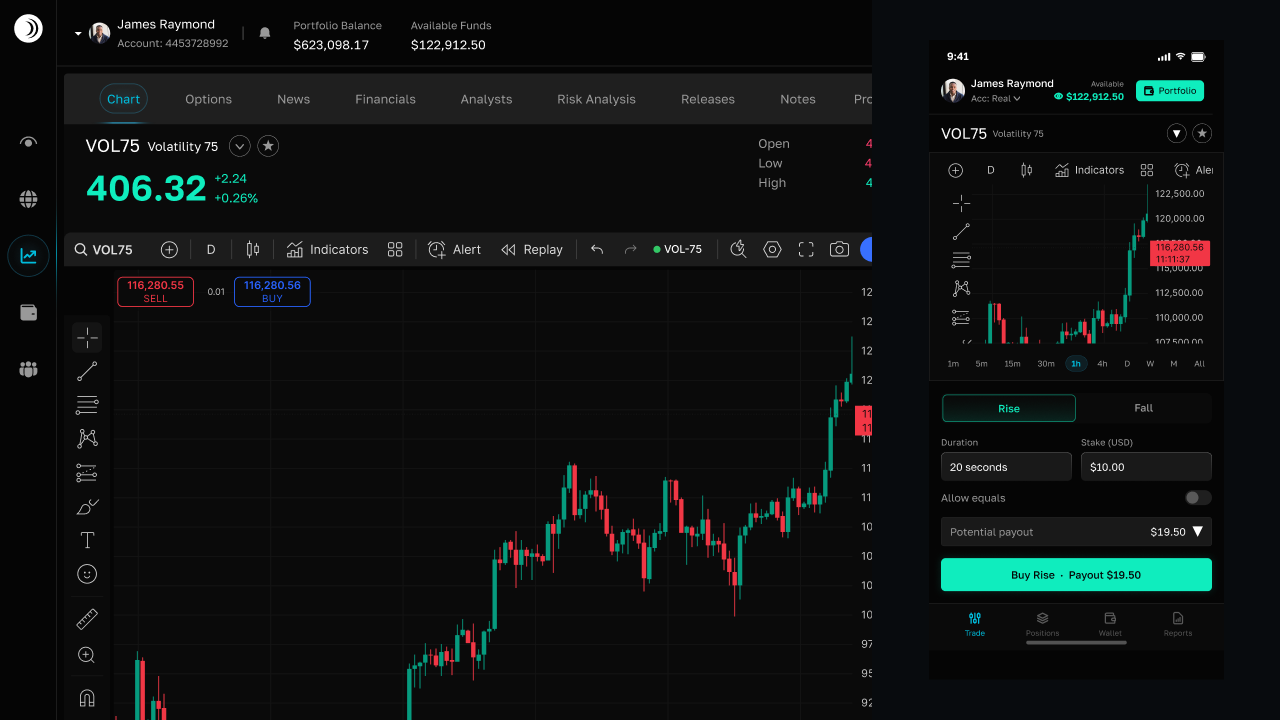
Rise contracts — predict that the exit price finishes above your entry when the contract expires.
 4 MIN
4 MINLower
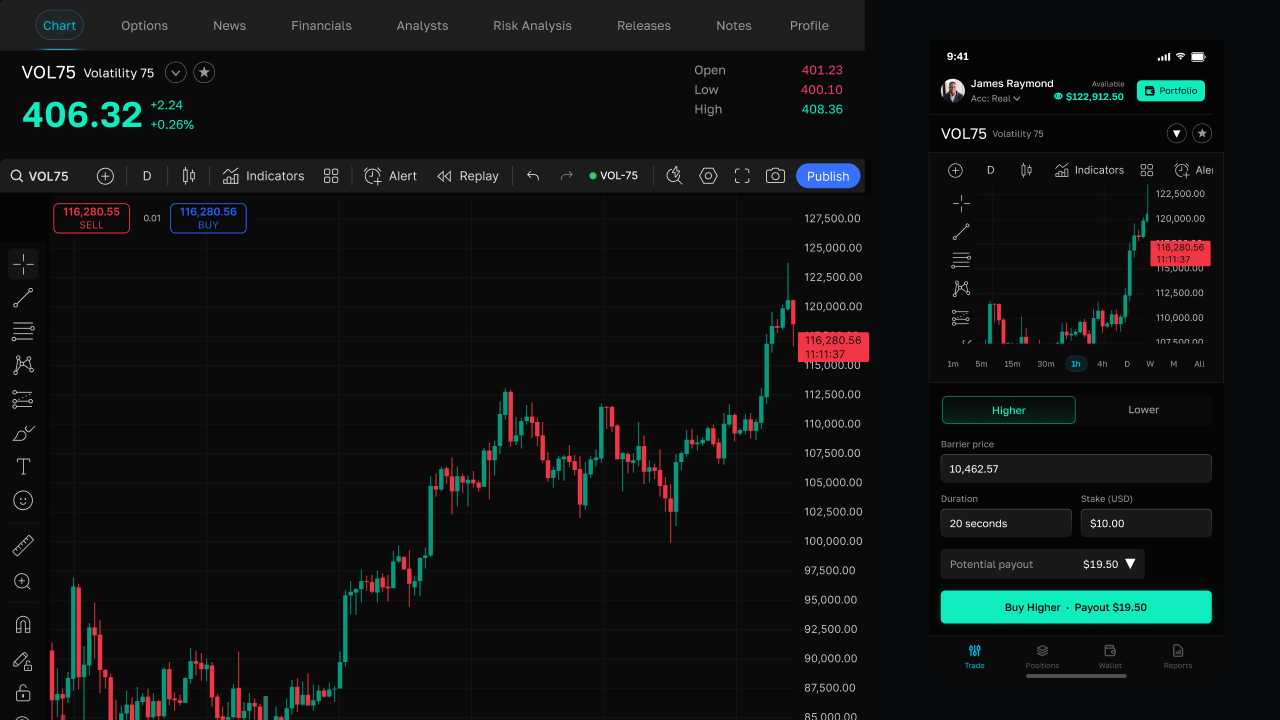
Lower barrier contracts — predict the index finishes below a barrier you choose.
 4 MIN
4 MINStakes, Duration & Payouts
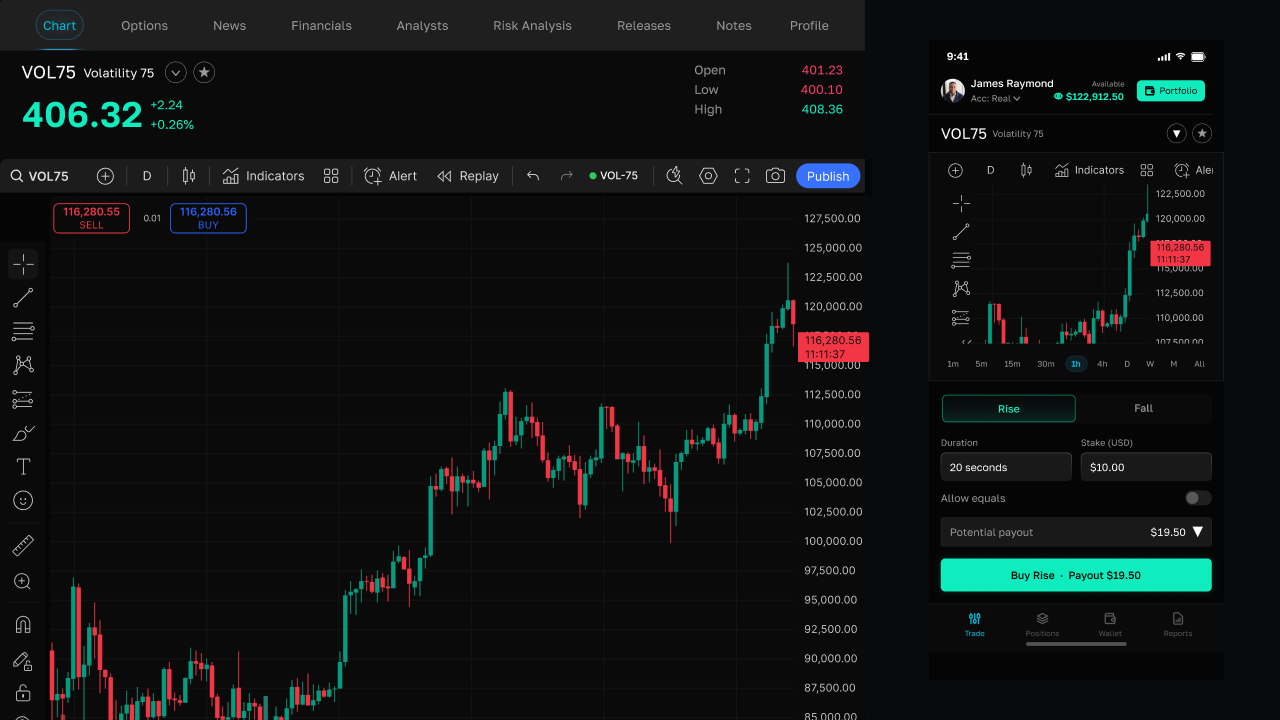
Stake limits, tick duration, win/loss payouts, and demo vs. real account behaviour.